
How does investing work?

How does investing work?
Both investors and companies go through a 5-step process.
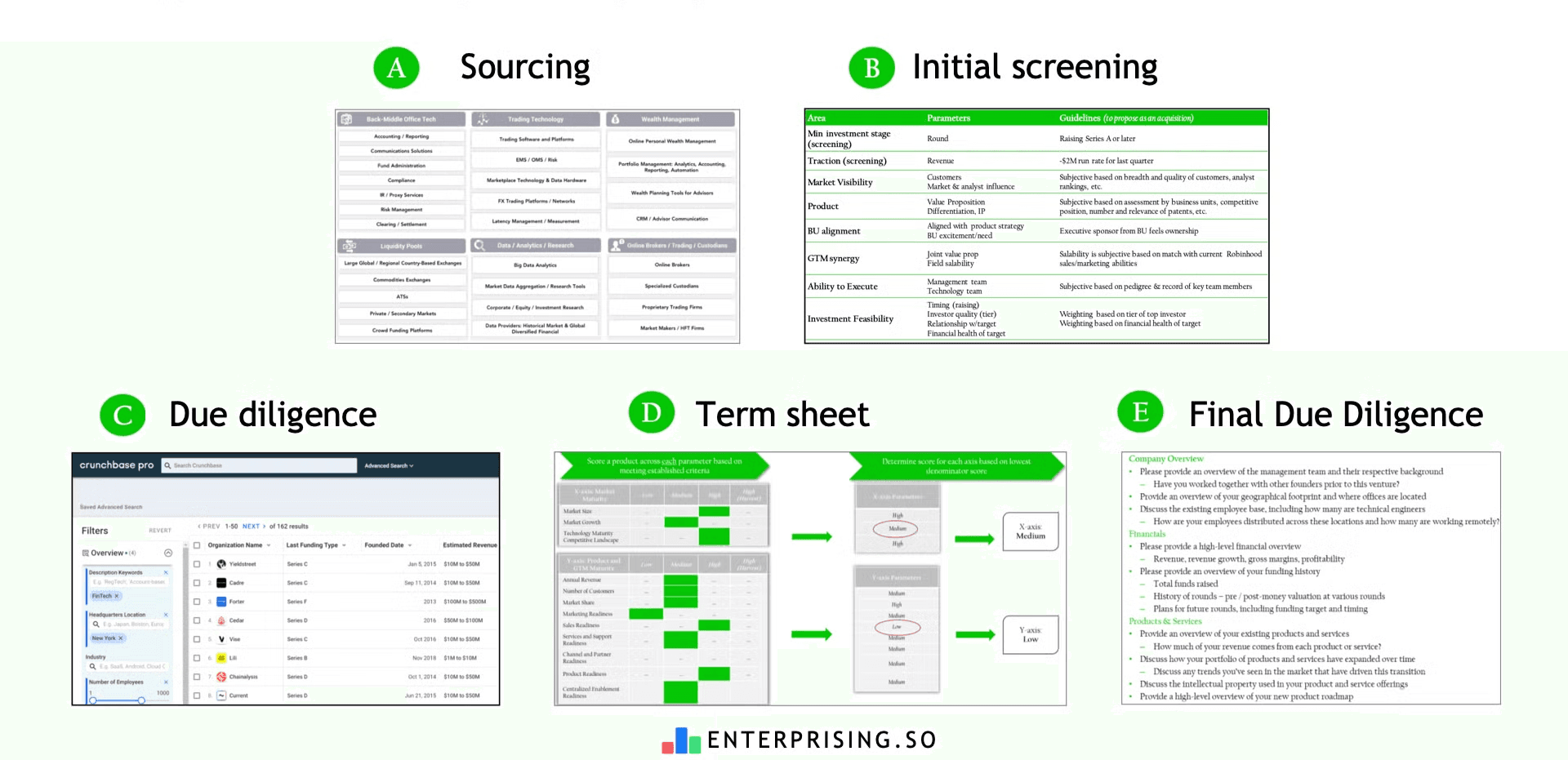
1. Sourcing 🔎
Investors identify potential investment opportunities in a process called sourcing. This can happen through various channels, such as direct pitches from startups, referrals from other investors, or by attending industry events.
2. Initial Screening 📁
After identifying a potential deal, investors perform a quick evaluation to determine if the startup aligns with their investment thesis. This evaluation includes analyzing the industry, stage, and business model of the startup.
This stage of the deal process includes reviewing pitch decks, holding initial meetings with founders, and assessing whether the opportunity is worth deeper exploration. If it passes this stage, it moves to a more detailed review.
3. Due Diligence 🔬
Due diligence is an analysis of the startup to assess its viability and potential for success.
The due diligence process includes evaluating the team’s background, financials, and product-market fit, among other factors. investors may also speak with customers, and industry experts to validate the startup’s claims.
4. Term Sheet 📃
If due diligence is satisfactory, the investors issue a term sheet. The term sheet is a non-binding agreement that defines the basic terms and conditions of the investment.
The term sheet includes aspects like ownership percentage, the valuation of the company, the amount of investment, liquidation preferences, and other rights.
Example Term Sheet:
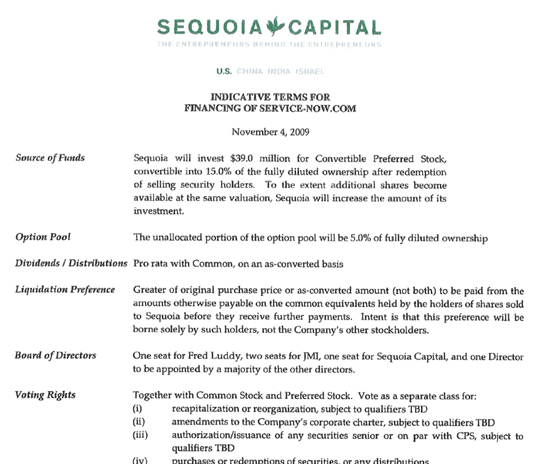
Term Sheet: ServiceNow and Sequoia Capital (2009)
5. Final Review ⚖️
Once the term sheet is signed, the final due diligence and legal documentation is completed. When this is done, the deal is closed.
date published
Oct 24, 2025
reading time
5 min